Newcastle Concrete Services

Newcastle Concrete Stumps

Replace failing timber stumps with concrete, bring the floor back to level and give an older home a footing that cannot rot.

Project Overview

Concrete Stumps Newcastle

Replace failing timber stumps with concrete, bring the floor back to level and give an older home a footing that cannot rot.

Timber stumps do not last forever, and Newcastle has a great many houses still standing on the ones they were built with. Our concrete stumps Newcastle team replaces failing timber with concrete, re-levels the floor in the process and gives the house a footing that cannot rot or be eaten.

We inspect the subfloor before quoting, because the number of stumps genuinely needing replacement, how far the floor has dropped and what the bearers and joists are doing all change the scope. Sloping floors, sticking doors, cracked cornices and gaps opening above skirtings are usually what brings people to us, and they are symptoms rather than the problem.

Whether the house needs a handful of stumps replaced or a full restump, we handle excavation, footings, stumps, packing and levelling, and work to whatever approval and inspection requirements apply.

Project Enquiry

Request a Project Quote

All fields are required so the enquiry has enough project context.

Service Type *
Area Size *
Project Timeline *

Plan The Work

Planning Concrete Stumps in Newcastle

Restumping is decided under the floor, not above it. Stump condition, floor levels, bearer and joist sizes, how much room there is to work in the subfloor and how far the house has already moved all have to be established before any scope or price is worth the paper it is on.

  • Condition of the existing stumps and the subfloor timbers
  • How far out of level the floor currently sits
  • Subfloor clearance and access for crews and materials
  • Approval, engineering and inspection requirements

A Practical Result

Restumping in Newcastle: What To Expect

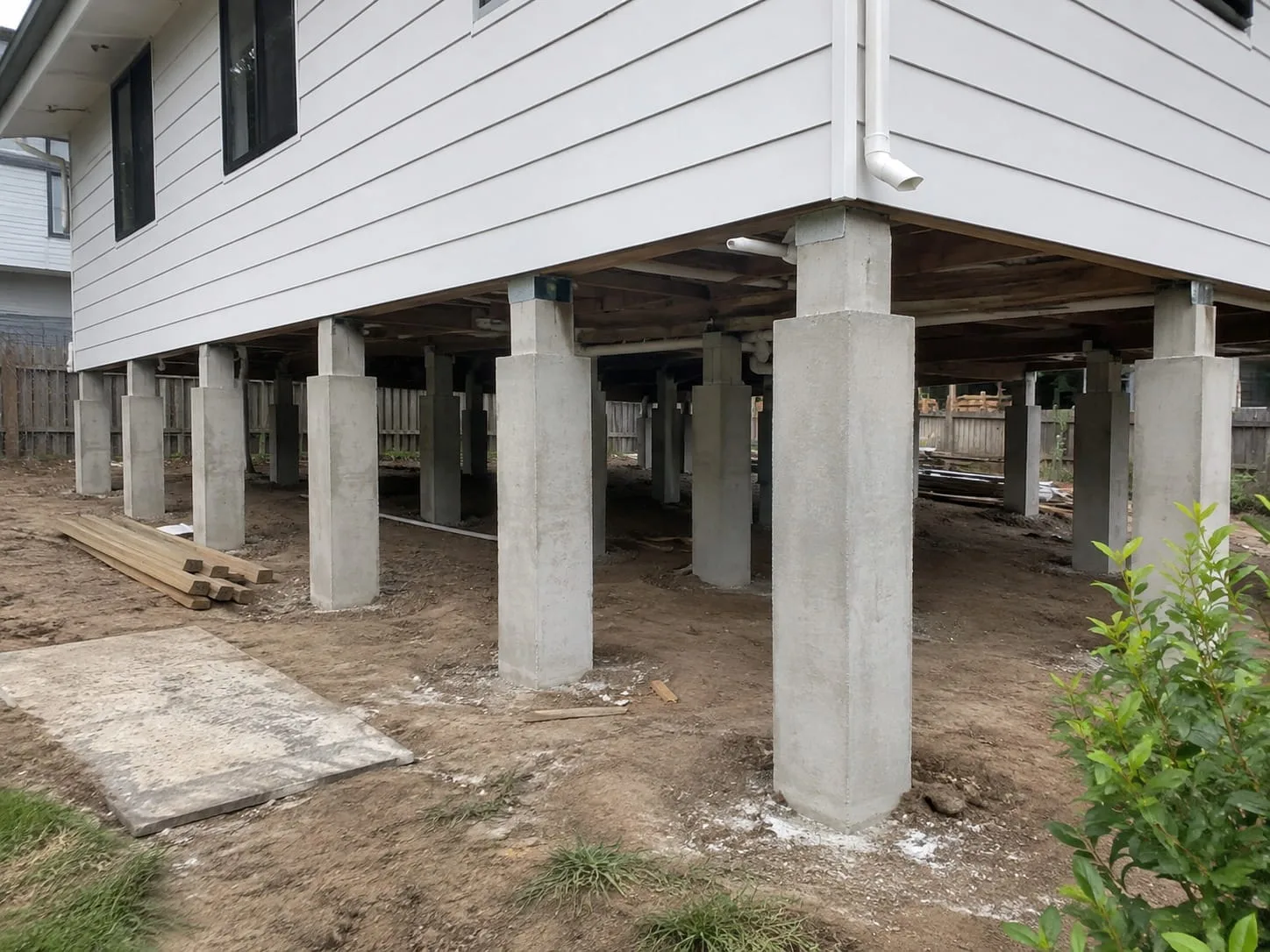
Expect a staged, methodical job rather than a quick one. The subfloor is propped, old stumps are removed section by section, footings are excavated and poured, concrete stumps are set and the bearers are packed back to a level agreed with you beforehand. Bringing a century-old house fully back to level is not always the goal, because moving an old structure too far too fast opens up plaster and cornices, so the target level is a decision made with you rather than for you.

Some plaster cracking and door adjustment is normal afterwards, and any honest restumper will tell you that before starting rather than after. Once complete, the house sits on footings sized for the ground beneath it and the sinking that caused the problem stops.

Restumping generally requires approval and inspection, and in declared Mine Subsidence Districts there can be additional requirements. We will tell you what applies to your property before work is booked.

Local Conditions

Why Restumping Is Common Across Newcastle

Newcastle has an unusually large stock of Victorian, Federation, Californian bungalow and interwar housing — much of it built for mining, steelworks and railway families — and a great deal of it sits on timber stumps set directly into the ground. Add decades of humidity, ground moisture, termite pressure and the occasional flood through the low-lying suburbs, and those stumps soften at the base until the floor above follows them down. It is one of the most common structural jobs in the city precisely because of what was built here and when.

The ground makes it worse in places. Clay through the western suburbs swells and shrinks with the seasons, lifting and dropping footings unevenly, and the estuarine silt underlying Carrington, Wickham, Islington and parts of Hamilton is soft and compressible, so settlement is rarely uniform. That is why sticking doors and sloping floors tend to appear in one part of a house rather than everywhere at once. Concrete stumps on properly sized footings deal with both problems: there is nothing to rot, and the footing is designed for the ground it actually sits in. A subfloor inspection is the only reliable way to confirm how many stumps need doing and what the job involves.

Nothing Left to Rot

Timber stumps set into the ground are on a clock from the day they go in. Concrete has no organic material in it, so ground moisture and humidity simply do not affect it. The replacement is genuinely permanent rather than another few decades of borrowed time.

Termites Have Nothing to Eat

The Hunter has genuine termite pressure, and subfloor timber sitting in damp ground is the ideal entry point. Concrete stumps remove that pathway into the house entirely. Combined with proper subfloor ventilation it removes most of the risk to the house.

Floors Come Back to Level

Re-levelling during the restump takes the slope out of the floor. It is done in controlled stages to an agreed target, because moving an old house too far too fast opens up plaster. The target level is agreed with you beforehand rather than decided on the day.

Doors and Windows Work Again

Sticking doors, jamming sashes and gaps opening above skirtings are symptoms of the floor dropping, not of the joinery. Correcting the stumps usually resolves all of them at once. Some plaster adjustment afterwards is normal, and we will say so before starting.

Footings Sized for the Ground

New footings are sized for the soil actually beneath them, whether that is the clay through the west or the soft estuarine material around the harbour, rather than repeating the original guess. That is what stops the same uneven settlement returning in another decade.

Protects an Older Home’s Value

Newcastle has an unusually large stock of period housing, and buyers scrutinise the subfloor. A completed restump removes the single biggest question mark hanging over an older home. It is also work that is far easier to do before a renovation than after one.

Discuss concrete stumps in Newcastle

Send us the suburb, rough dimensions, what is there now and the finish you have in mind, and we will come back with a proper price.