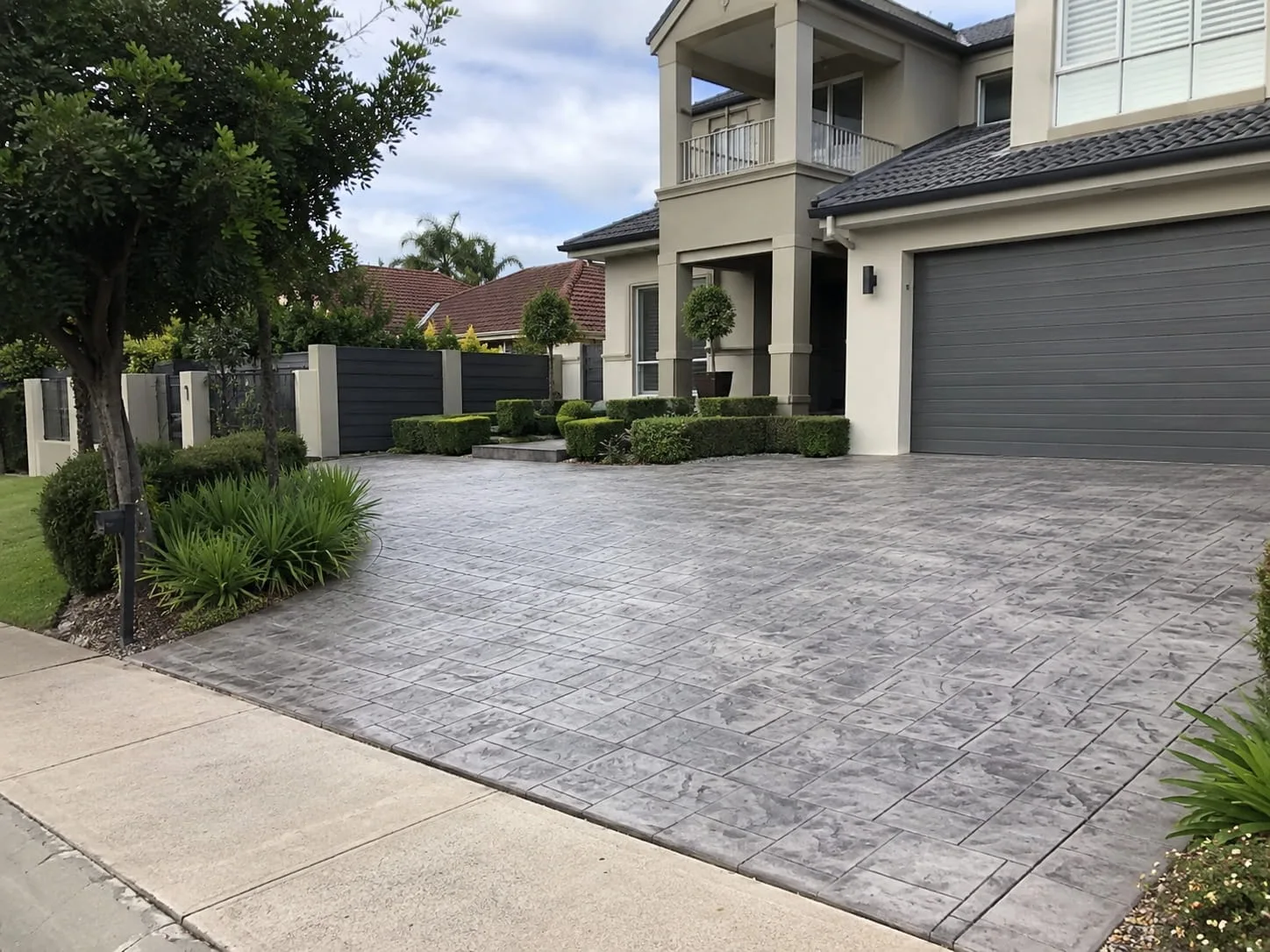
Stamped concrete offers Newcastle homeowners the look of stone, slate or brick paving without the cost of the real material or the long-term maintenance that comes with laid units. The pattern is pressed into the surface while the concrete is still workable, then coloured and sealed to build depth and definition. Chosen with some restraint, it sits well against the sandstone, tuck-pointed brick and tessellated verandah tiles found through the older inner suburbs, though a subtle pattern almost always reads better on a heritage frontage than a heavy one. Properly sealed, stamped concrete copes with the humidity, summer downpours and salt-laden air that come with a coastal city, provided drainage and slip resistance are worked out at design stage rather than discovered afterwards — a smooth patterned surface on a shaded, damp driveway can get slippery quickly here. It suits homeowners who want a premium look without the upkeep of natural stone. Because pattern, colour and sealing choices all affect long-term performance, a site conversation is the best way to settle on the right stamped concrete approach for your driveway and the style of the house.
Stone Look, No Joints
You get the appearance of pavers, slate or cobblestone from a single continuous pour. There is no jointing sand to wash out, nothing for weeds and ants to work up through, and no units to re-lay. The maintenance saving alone usually justifies it.
A Fraction of Natural Stone
Real flagstone or cobble costs several times as much to buy and lay, and needs a bedding layer that moves over time. Stamping gives you the same visual language on a slab that stays put. You also avoid the specialist labour that laying genuine stone properly demands.
One Slab, Nothing to Shift
Because it is a single reinforced pour rather than thousands of individual units, there is no edge creep, no rutting where the wheels track and no sunken sections to lift and re-bed. Reinforcement runs continuously through it, which is something paving can never offer.
Restrained Patterns Suit Period Homes
An ashlar or slate pattern in a muted tone sits comfortably against the Federation brick and tuck-pointing found through Hamilton, Cooks Hill and The Junction, where a heavy cobble would look wrong. We will always show you a sample against the frontage before anything is ordered.
Sealed Against Salt and Sun
The sealer that keeps the pattern crisp is doing a second job on a coastal block, shielding the colour from UV and making salt film and leaf staining straightforward to wash off. Recoating every few years is the only real maintenance the finish asks of you.
Predictable Long-Term Upkeep
Maintenance is a wash down and a recoat every few years. Compare that with re-sanding paver joints, lifting settled units and treating the weeds that inevitably find their way between them. Over ten years the difference in time and money spent is genuinely significant.