
Newcastle Concrete Services
Newcastle Digging
Everyday digging for footings, posts, pits and services, with every underground asset located and confirmed before the bucket breaks ground.
Project Overview
Digging Newcastle
Everyday digging for footings, posts, pits and services, with every underground asset located and confirmed before the bucket breaks ground.
Not every job needs a full excavation package. Our digging services Newcastle team handles the smaller work properly, from post holes and pier holes through to pits, footings and general site digging for residential and commercial projects.
We bring equipment sized to the job rather than to the invoice, whether that means a mini excavator, an auger or hand tools in a tight side passage. Every job starts with a clear understanding of what is underground — services, drainage and soil conditions — so digging happens safely and without expensive surprises.
One-off holes or ongoing site work, we treat small jobs with the same care as large ones. No job is too straightforward to be worth doing properly.
What We Dig
Our Newcastle Digging Services
A lot of what we get called out for is simply digging: post holes for fences, pergolas and retaining wall posts, footing holes and pads, pier holes, soakwells and drainage pits, tank and pump bases, stump and root removal, garden bed and planter excavation, and holes for tanks, pits and pool equipment.
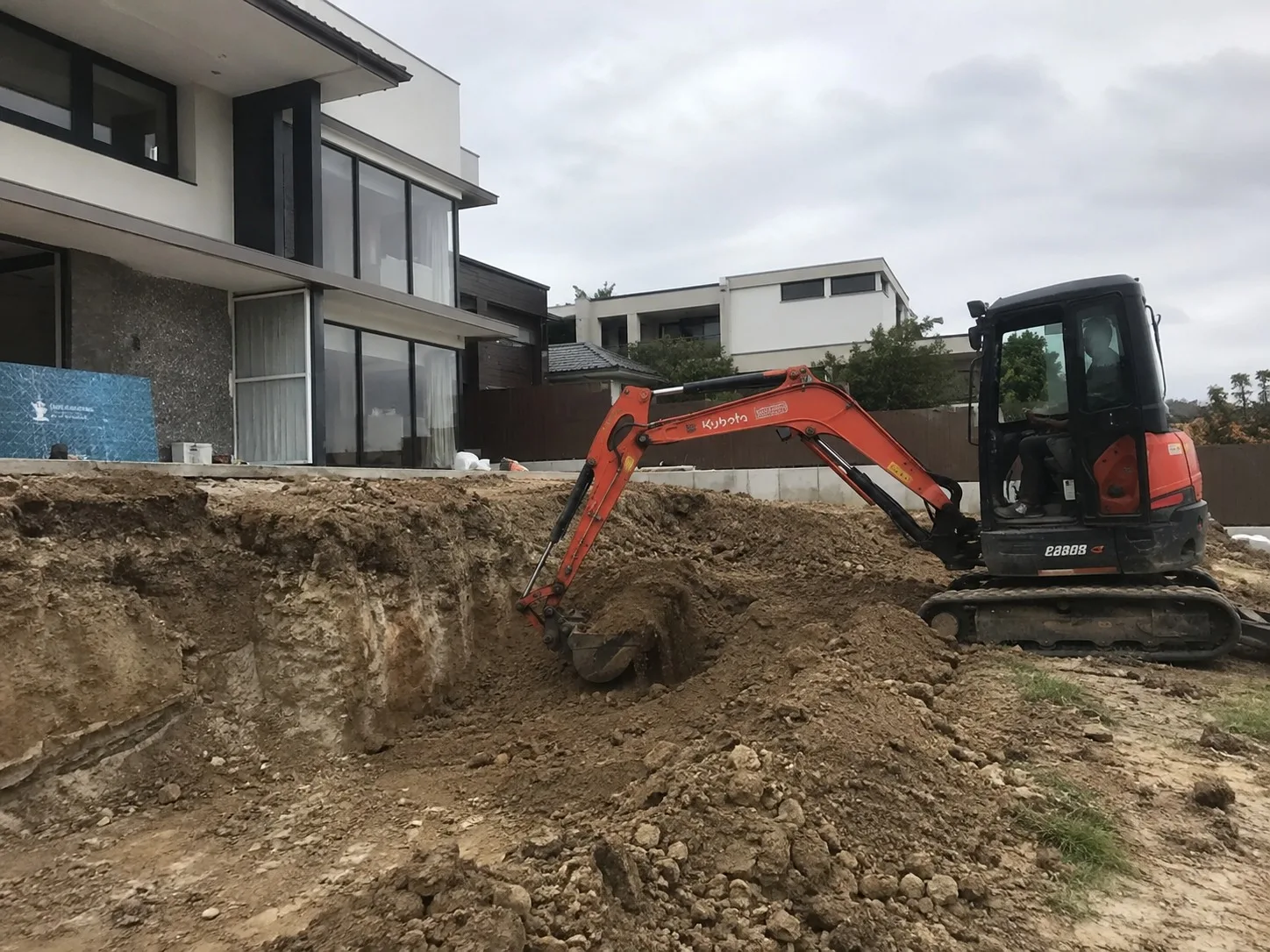
Small work still benefits from the right machine. A mini excavator or auger gets through in a fraction of the time a crew with shovels would take, holds a consistent depth and diameter, and leaves a clean hole that concrete or a post can go straight into. On tight blocks we bring machines sized to fit through a standard gate, so there is no taking fencing down just to get access.
We are happy to handle the digging alone if you have your own trades lined up to follow, or carry it through into the concrete and the structure if that is simpler. Either way, tell us how many holes, what diameter and depth, and what is going into them, and we will price it as a defined piece of work rather than an hourly guess.
Cover And Compliance
Digging in Newcastle with Insurance
Small digging jobs cause a surprising share of service strikes, mostly because people assume a shallow hole is a safe hole. Water, gas, electrical and communications services are frequently much shallower than expected, particularly through the older inner suburbs where services have been re-laid over a century and landscaping has been built up on top of them. We hold public liability insurance and can provide a certificate of currency before starting, so cover is documented rather than assumed.
The insurance sits behind a process designed to make claims unnecessary. Every site gets a Before You Dig Australia enquiry, plans are checked against what is visible on the ground, and anything the machine might reach is confirmed by hand before we dig. On a fence line with a service running along it, that means potholing to establish exactly where it sits rather than trusting a measurement off a drawing.
If you need certificates or documentation for a builder, insurer or strata committee before we attend, tell us what they need and we will send it through in advance.
Safe Practice
Safe Digging Process on Every Job
One post hole or fifty, the process does not change. We lodge a Before You Dig Australia enquiry and read through whatever the asset owners send back. Then we walk the ground and check those plans against what can actually be seen: meters, pits, inspection openings and the tell-tale lines of earlier trenching. Plans are guidance rather than gospel, because services get relocated and re-laid without anyone updating the records.
Third, anything within reach of the dig is exposed by hand or potholed to confirm its real position and depth. Fourth, we stay outside the no-go zones set by the asset owners, hand-dig where required and use a spotter when a machine is working close to a located service. Fifth, depth is treated as a hazard in its own right, so anything deep enough to enter is battered or supported rather than left as an open vertical face.
Finally, holes are covered or barricaded if they are left open, spoil is kept clear of the edge, and the ground is reinstated when the work is done. None of it is complicated. It just has to actually happen on every job rather than only the ones that look risky.
Discuss digging in Newcastle
Send us the suburb, rough dimensions, what is there now and the finish you have in mind, and we will come back with a proper price.