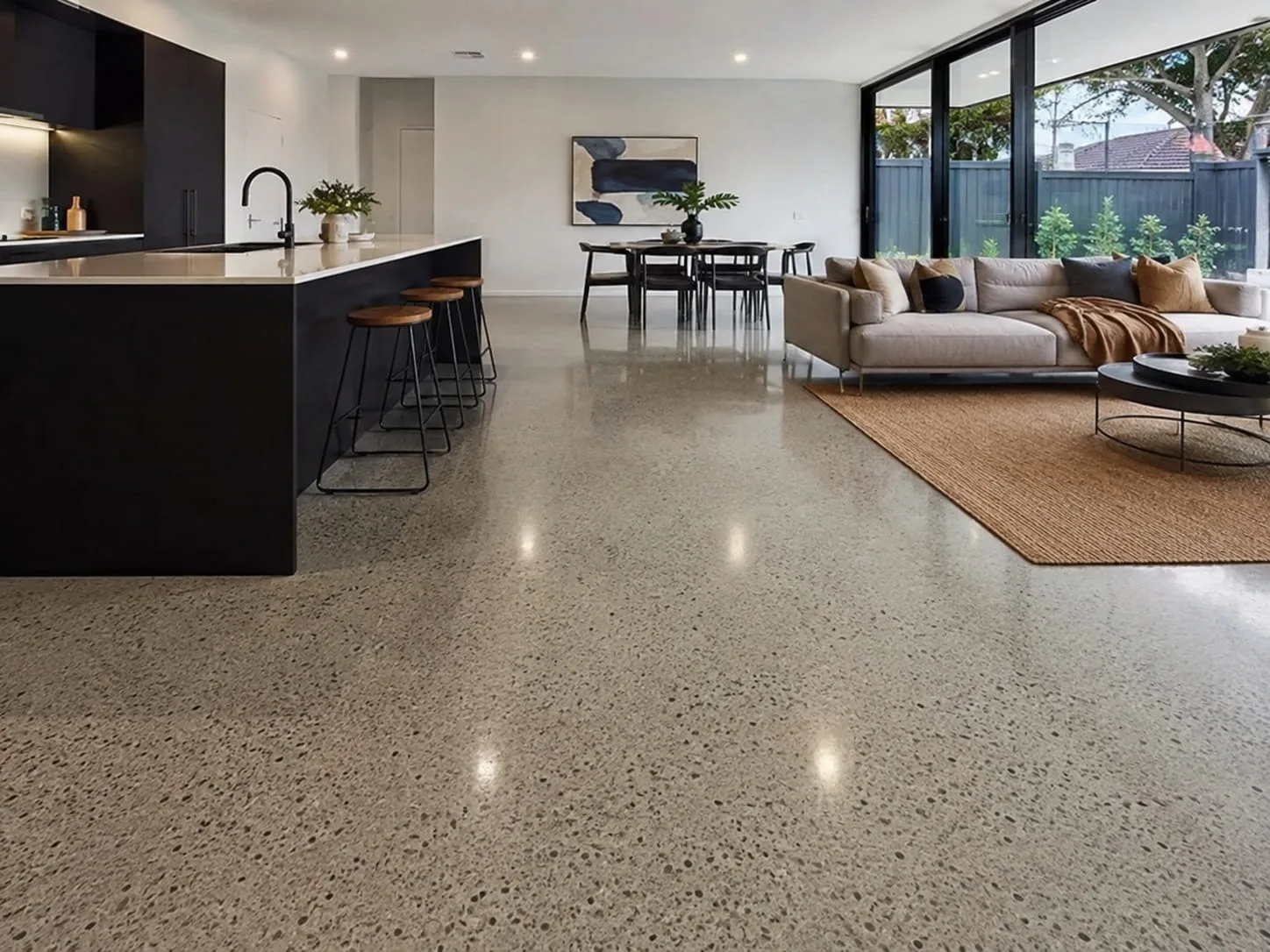
Polishing is at its best when there is already a sound slab in place and you want to get more out of it. If you are pulling up tired carpet, tiles or vinyl, the concrete underneath is often a better floor than whatever you were about to buy, and you skip the cost of a new surface entirely. New builds are equally good candidates provided the slab is poured with polishing in mind from the outset.
It also suits this climate particularly well. Polished floors stay noticeably cooler than timber through a humid Newcastle summer, they do not cup, swell or lift the way boards and floating floors can when humidity climbs, and they wipe clean when wet feet, sand and garden mud come through the door — which, on a city where half the population walks back from the beach, is not a small thing. Garages, sheds, covered alfresco areas and open-plan living all work well.
There are situations where we will point you elsewhere. Badly cracked slabs, floors with significant moisture rising through them and heavily patched concrete can all technically be polished, but an overlay or a resurfacing system often gives a better outcome. We would rather have that conversation at quote stage than once the grinder is running.